Open to Senior / Principal PM roles · Agentic AI · AU Energy · Melbourne or remote

Hi, I'm Parag.

Agentic AI product manager. 18 years turning Australian energy regulation into shipped software.

I build the agentic AI tooling my own work needs, directing coding agents from spec to test plan, and I review and reject what they hand back instead of shipping the first draft.

18
Years in energy
$4M
Revenue protected/yr
AGL, 2017–22
2
Tools in Kaluza's agent registry
Portrait of Parag Pandya, Senior Product Manager
Energy + Agentic AI

Where I've worked

Kaluza Gentrack AGL Energy Powershop
Lean Six Sigma – Green Belt Professional Scrum Master I RPA Business Analyst Diploma AI Foundations: Machine Learning Critical Thinking & Strategic Thinking Change Management Certified Risk Management ISO 31000 Expert

Experience

Apr 2026 – Present Current role

Senior Product Manager (AU Energy)

Kaluza

I look after regulatory product at Kaluza, an energy technology company that builds the software retailers run on, and build the AI tooling my own job needs.

  • •Lead the product side of a regulated Consumer Data Right API integration: field-level data mapping, conformance testing and the client-facing documentation that goes with it
  • •Shipped a compliance traceability app covering most of Australia's energy rulebook, replacing a manual cross-team search nobody could ever quite finish
  • •Shipped a code-grounded assistant that lets product managers answer their own change-impact questions in minutes, instead of pulling an engineer off delivery for two days
  • •Run everything as an experiment: pilot small, agree the kill criterion up front, then review and reject the output rather than ship the first draft. Pulled AI back out of one process once a plain script proved cheaper and more reliable. Two of the agentic AI tools built this way now sit in Kaluza's shared internal agent registry, adopted by colleagues outside my team
Sept 2025 – Mar 2026

Product Manager

Gentrack

I owned the Australian roadmap for Gentrack's utilities platform, used by energy retailers and networks.

  • •Owned the Australian roadmap across billing, metering and market change
  • •Worked across Flexible Trading Arrangements, AEMO schema upgrades and ESC reforms
  • •Started using my own AI tools to read regulation and draft requirements faster
Oct 2024 – Sep 2025

Continuous Improvement Program Manager

Powershop Australia

I led cross-functional transformation work at Powershop, across some of the more sensitive parts of energy retail.

  • •Led transformation work across Consumer Data Right, life support, family and domestic violence support, customer data and smart meter deployment
  • •Delivered phase 2 of Service Order Recovery, recovering up to $700k in revenue leakage through pass-through charges
  • •Completed discovery for the wider transformation program, mapping the gaps and setting out what to fix first
Oct 2022 – Sept 2024

Project Change Lead

Powershop Australia

I delivered cross-functional business process change at Powershop, including its Consumer Data Right project end to end.

  • •Delivered the Consumer Data Right project end to end, as business analyst, tester and subject matter expert
  • •Delivered AEMO r43 and r44 schema upgrades as business analyst and tester
  • •Delivered phase 1 of Service Order Recovery, recovering up to $400k in revenue leakage
Mar 2022 – Sept 2022

Client Delivery Manager

Illion

I delivered client projects at Illion, a data and analytics company, across banking, finance and energy.

  • •Delivered 24 projects in 6 months, from $10k to $150k, running up to 14 in parallel across banking, finance and energy clients
  • •Led a $900k debt collection project for a tier two energy retailer that generated over $1.3m a month in collections
  • •Delivered API upgrades, open banking integrations and automated IVR/SMS collections, keeping the defect rate under 1% across all projects
Nov 2017 – Feb 2022

Operational Improvement Lead

AGL Energy

I spent over four years at AGL, moving from billing analyst into operational improvement and delivery.

  • •Cut about $670k a year in costs and around $4m a year in revenue leakage
  • •Introduced RPA that handles 200k+ transactions a year
  • •Delivered concessions, life support and other regulatory changes

Things I've built

A few of the tools I've made, mostly to take the slow parts out of my own work.

These are live demos I designed, built and host myself. A couple run on small servers, so if one is slow to load, give it a few seconds to wake up.

MyOpsLab sign-in screen, an AI operations platform for regulatory work Self-hosted
AI & Compliance 2026

MyOpsLab

A workspace that changes how a regulatory team starts its work. RegOps turns a regulation into an obligations register, a traceability matrix, a gap analysis, user stories and a test plan, so the team can start on day one and spend its time on the calls a model can't make.

#AI agents #RegOps #Self-hosted
Open the live demo
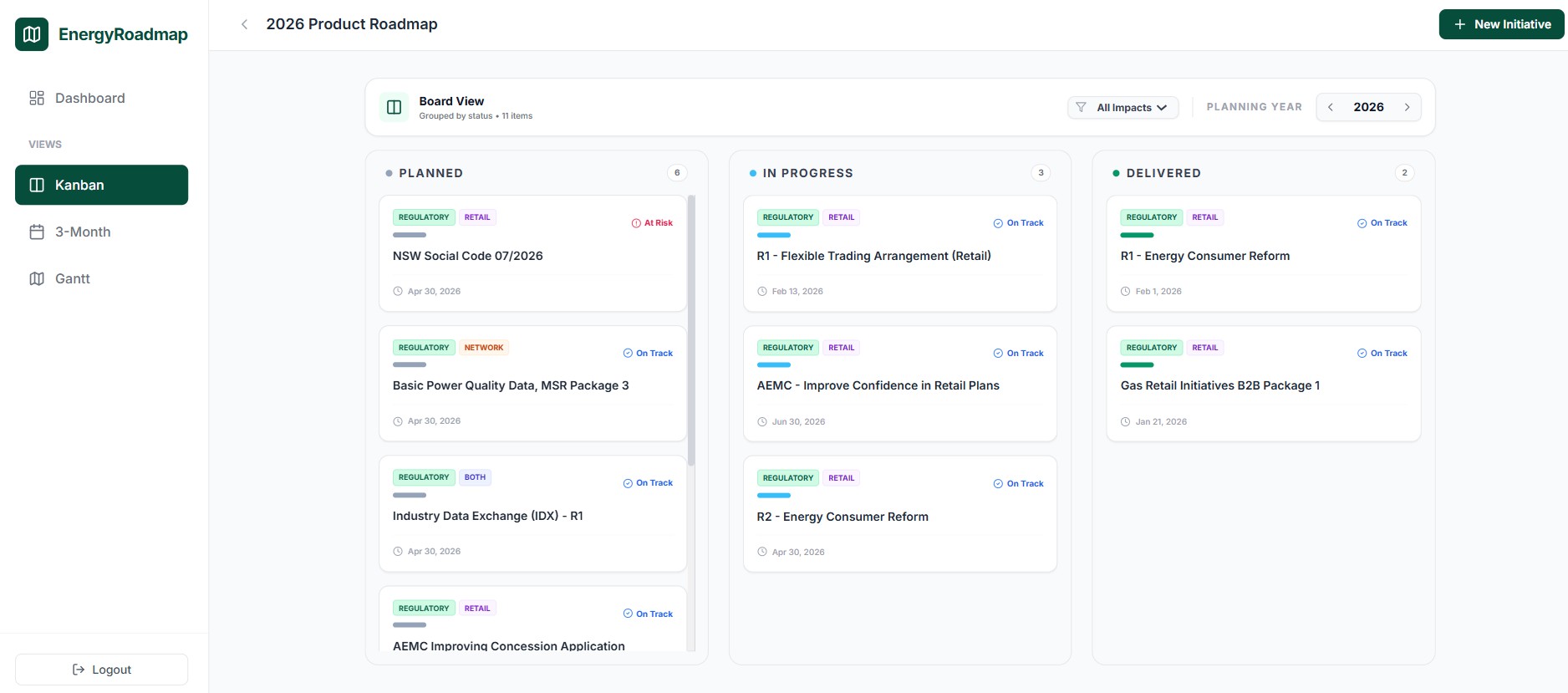
AUE Roadmap Tool dashboard showing a private roadmap view for energy teams Live
Product & AI 2025

AUE Roadmap Tool

A simple roadmap tool for energy teams who wanted something private and easier to live with than Jira. Then I added a small AI agent that writes the daily status update straight from the live data, so nobody has to chase people for it.

#Roadmap #AI agent #Energy teams
Open the live demo
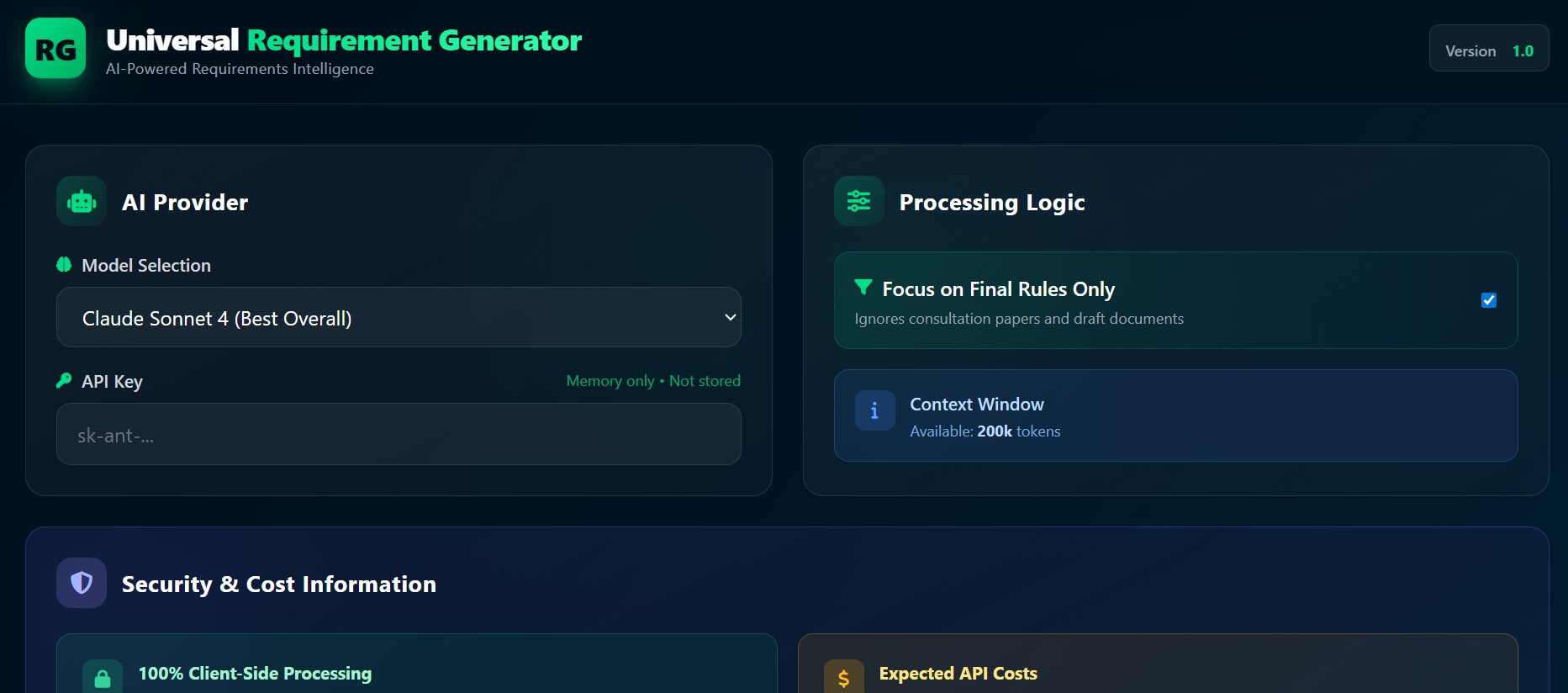
Regs-Reqs interface showing regulatory text converted into requirements and user stories Live
The prototype 2024

Regs-Reqs

The prototype that proved the pattern behind MyOpsLab. Paste in regulatory text, get back clear requirements and user stories you can hand straight to a team.

#Regulatory AI #Requirements
Open the live demo

May take ~20s to wake up on first load (free tier hosting).

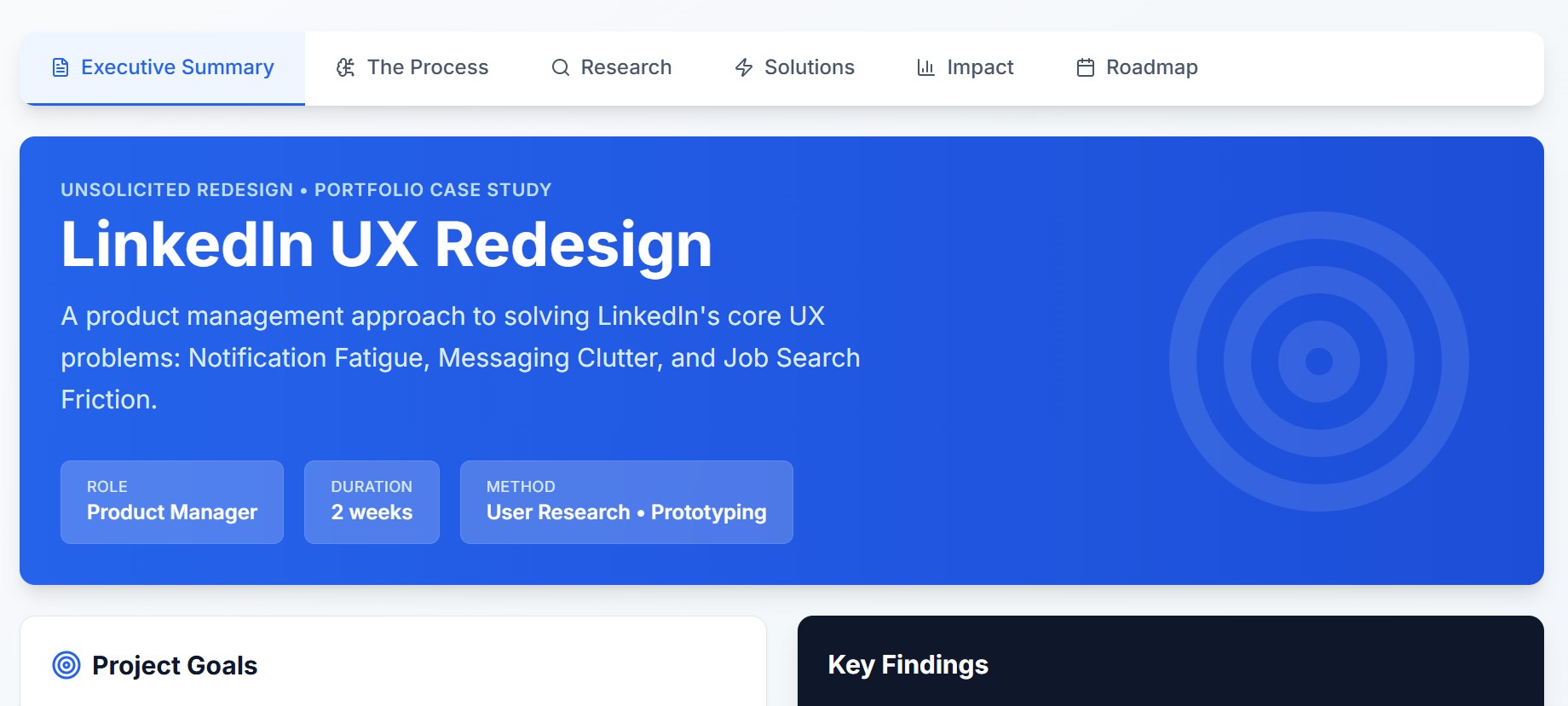
LinkedIn feed redesign case study cover slide
Side project · for fun 2024

LinkedIn Feed Redesign

A redesign exercise I did for fun. I took the LinkedIn feed and tried to make it quieter and easier to read, then wrote up the reason behind each change.

Impact

Energy product management is the through-line: working from Melbourne, I've spent the past year shipping agentic AI across the product lifecycle: regulatory analysis, spec authoring, compliance traceability, documentation and test case generation. Two of those tools have earned a spot in Kaluza's shared internal agent registry, picked up by colleagues outside my own team. My rule is to pilot small, agree the kill criterion before I start, and I've pulled AI back out of at least one process once a plain script did the job better. Behind all of it sits 18 years in Melbourne's energy industry, in the gap between a new rule and the systems that have to follow it.

18
Years in energy
$670K
Costs saved/yr
AGL, 2017–22
200K+
Transactions automated/yr
AGL, 2017–22
2
Tools in Kaluza's registry

Product strategy

Working out what to build next, and what to leave alone, when there are always more requests than time.

Regulatory delivery

Reading the rules from AEMO, AER and the rest, then turning them into something a team can actually build.

Energy operations

Billing, metering, life support and settlements. The day to day machinery an energy retailer runs on.

Agentic AI & automation

Directing Claude Code and other agentic AI tools to read documents, draft a first version and take care of the repetitive work. I pilot small, with a kill criterion set before I start.

Product leadership

  • Energy product management
  • Product strategy
  • Regulatory delivery
  • Stakeholders and governance
  • Prioritisation

Energy and markets

  • Australian energy market
  • Regulatory change
  • Metering and settlements
  • Billing operations

Building and AI

  • Directing AI coding agents
  • Piloting with kill criteria
  • Turning rules into requirements
  • Responsible AI and risk controls

What I've Been Writing

Thoughts on product strategy, energy policy, and where tech meets regulation.

Close-up of printed regulation documents and a pen, representing energy regulatory text review
AI and Compliance Jun 10, 2026

How I built an AI that reads energy regulation

I got tired of spending weeks turning new rules into requirements, so I built something to do the first pass for me. Here is how it works, and where it still needs a person.

Modern LED streetlight fixture against an overcast sky
Smart Infrastructure Nov 28, 2024

Streetlights that measure themselves

Flexible Trading Arrangements and the new Type 9 model are quietly changing how we treat unmetered supply, like streetlights and chargers.

Household electricity meter mounted on an exterior wall
Energy Policy Oct 24, 2024

The reality of three hours of free electricity

NSW, QLD and SA are bringing in three-hour free electricity windows. It sounds like a clear win for households, but the network tariffs underneath tell a more complicated story.

Classical courthouse facade with stone columns, representing regulatory and compliance risk
Compliance Aug 15, 2024

The $27 million lesson on regulatory risk

A look at the fines hitting the energy sector, and why the quiet problems are the dangerous ones for a utility platform.

Let's talk.

I'm looking for my next Senior or Principal PM role building AI-native product in regulated industries, ideally Australian energy. If that sounds like your team, grab my CV or send a message below. I read everything myself.

Hiring for product, energy or AI?

If you're looking for someone, I'd love to hear from you. Grab my CV or send me a message, whichever is easier for you.

AI & Compliance

MyOpsLab

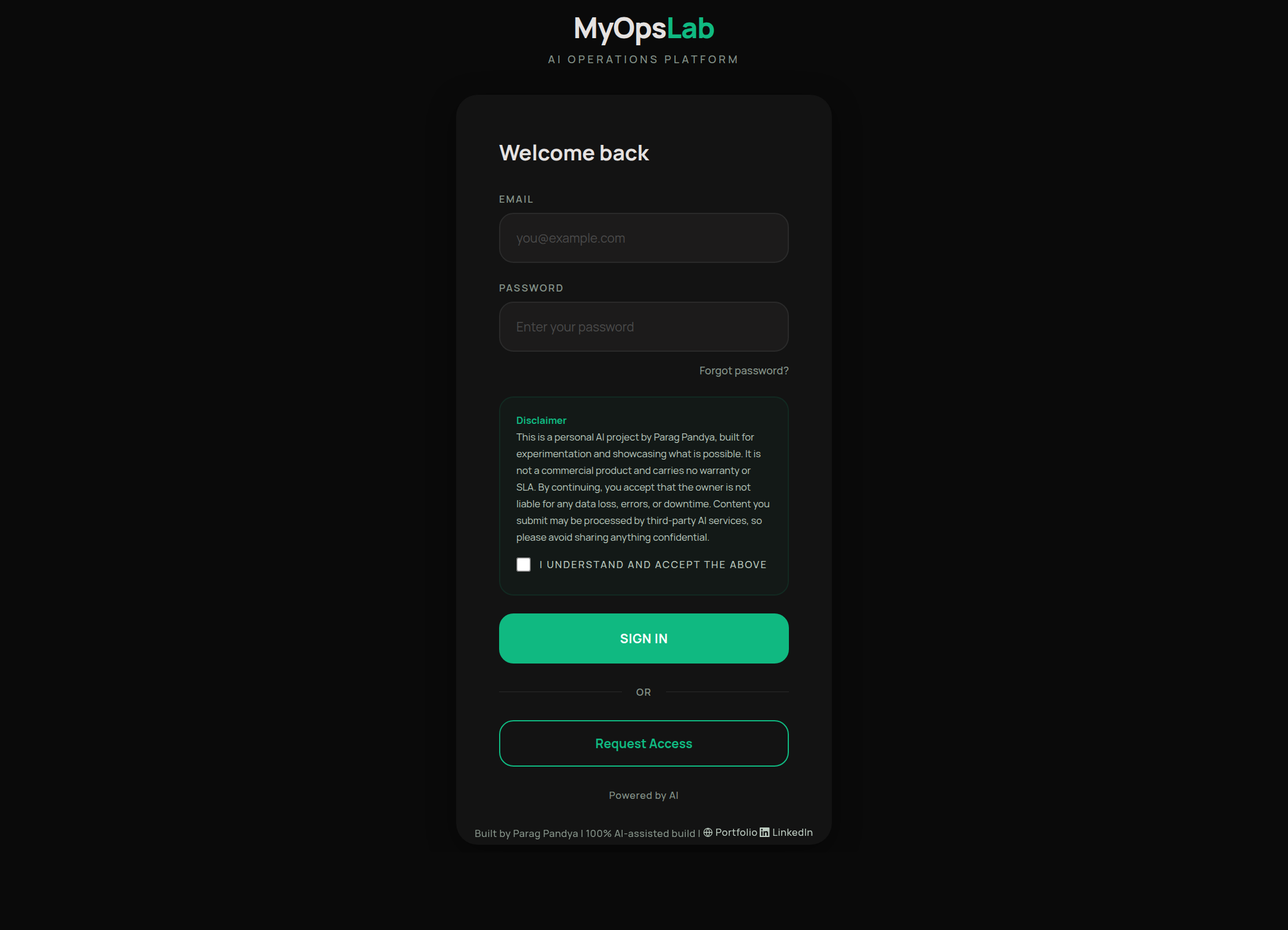
MyOpsLab sign-in screen

The problem

Every time a new regulation lands, the same thing happens. Weeks of reading PDFs, building spreadsheets, and arguing about what the rule actually asks for. Good people end up spending their time on the boring part instead of the build.

What I did

I built a workspace with a handful of agents, each good at one job. RegOps is the one I lean on most. It reads a regulation and writes the documents I would normally write by hand, so I can spend my time checking the thinking instead of typing it all out.

What came out of it

  • ✓Read 253 pages across four Australian energy regulations and pulled out 402 separate obligations
  • ✓Turned what used to take weeks into an afternoon
  • ✓Runs on my own server, on public regulatory documents only. No work or customer data goes anywhere near it
  • ✓The same pattern is now the basis for a compliance traceability app I built at Kaluza, running on Kaluza's own infrastructure and reviewed the way any other production tool is
Product & AI

AUE Roadmap Tool

AUE Roadmap Tool dashboard

The problem

Roadmap updates were taking too long to pull together, and the team wanted something private rather than another seat in a big tool.

What I did

I built a light roadmap tool, then put a small agent on top of it that writes the daily summary from whatever is actually in the system that day.

What came out of it

  • ✓The daily status writes itself instead of someone chasing updates
  • ✓Kept the data private and easy to manage
  • ✓Running live at aueupdates.paragpandya.au
The prototype

Regs-Reqs

Regs-Reqs interface

The problem

Turning regulation into requirements by hand is slow, and two people often read the same rule in two different ways.

What I did

I built a small tool that does the first pass. It reads the text and drafts requirements and user stories in a consistent shape, ready for a person to check.

What came out of it

  • ✓A first draft of requirements in minutes, not days
  • ✓A consistent starting point everyone can work from
  • ✓Led directly to the fuller RegOps build inside MyOpsLab
AI and ComplianceJun 10, 2026

How I built an AI that reads energy regulation

Close-up of printed regulation documents and a pen, representing energy regulatory text review

Every job I have had in energy has involved the same painful week. A new rule drops, and someone has to read it, work out what it actually asks for, and write that down in a way a team can build. Usually that someone was me, and usually it took far longer than it should have.

So I built a tool to do the first pass. I call it RegOps. You give it a regulation as a PDF, and it reads the whole thing and hands back the documents I would normally write by hand.

What it produces

  • An obligations register, so nothing in the rule slips through
  • A traceability matrix that links each obligation to where it is handled
  • A gap analysis, user stories and a test plan

So far it has read 253 pages across four Australian energy regulations and pulled out 402 separate obligations. Work that used to take a team a few weeks now takes me an afternoon.

Where it still needs a person

It writes a first draft, not the final word. The model is good at finding obligations and not so good at judgement. It does not know which ones carry real risk, which ones our platform already handles, or where the business wants to draw the line. That part is still mine, and I think it should stay that way.

The point was never to remove the person. It was to clear the boring part out of the way so the person can spend their time on the decisions that actually matter.

That prototype is also the reason the idea scaled. A version of the same pattern is now the basis for a compliance traceability app I built at Kaluza, covering a large share of Australia's energy rulebook, running on Kaluza's own infrastructure and reviewed the way any other production tool is.
Smart InfrastructureNov 28, 2024

Streetlights that measure themselves

Modern LED streetlight fixture against an overcast sky

The new Type 9 model does not look like a headline reform, but it changes how we treat unmetered supply for good.

For the first time, we can take the measurement already built into devices like streetlights and chargers and use it directly for settlement. Instead of guessing consumption with estimates, we can actually know it from the data.

Why it matters

For councils and infrastructure owners, the conversation changes. Payments line up with what was actually used, not a flat estimate. Once that is true, things like smart dimming start to make commercial sense.

Energy PolicyOct 24, 2024

The reality of three hours of free electricity

Household electricity meter mounted on an exterior wall

"Three hours of free electricity every day" for households. It sounds great. I read the government's consultation paper on the solar sharer offer to see how it actually works, and it is more nuanced than the headline.

The policy

From July 2026, every retailer in NSW, south east QLD and SA has to offer a plan with a three-hour free window during peak solar hours. It is opt in.

The government's own modelling shows the benefit varies a lot depending on the household:

  • A one person home shifting about 10 percent of usage saves around $150 a year
  • A family of four shifting 25 to 30 percent saves $800 to $1,100 a year

The catch

The networks do not have matching free tariffs, so retailers still pay network charges during the free window. They have to recover that somewhere, most likely through higher rates outside the window.

My take: it is not bad policy, but it is more complicated than it looks. The real question is whether people shift their usage, or just use more overall.

ComplianceAug 15, 2024

The $27 million lesson on regulatory risk

Classical courthouse facade with stone columns, representing regulatory and compliance risk

Everyone noticed the $27 million in fines across the energy sector. The number that matters more to me is how many customers were affected.

There were no blackouts and no cyberattacks. Just things that did not feel quite right. A bill that landed sooner than expected. A message saying you were on the best plan when you were not.

I call these quiet problems. They do not set off alarms, so they sit there until they turn into a fine. What usually broke down was a handoff. System to system, team to team, control to control.

The lesson: if you are rebuilding a utility platform, make sure it can actually prove it is compliant, not just demo well.